Foreword
About This Book
You just got handed a workshop. Maybe your manager mentioned it in passing. Maybe a stakeholder said, "We should do a working session," and everyone in the room looked at you. Maybe you said yes before your brain caught up with your mouth. Whatever the circumstances, this isn't just an assignment to get through; it's a real chance to shape your team's direction, unlock new ideas, and nudge a project forward.
This book is your sprint plan.
This is not a 300-page reference guide you'll read someday. Instead, it's a step-by-step roadmap. Go from "I have no idea what I'm doing" to "I just ran a workshop, and it actually worked" in four days. You'll get a clear framework for scoping your objective, so you know exactly what the room will walk out with. You'll also get an agenda design process that takes the guesswork out of structure and timing.
For example, facilitators have used these materials to lead sessions in which teams identified key project milestones and established actionable next steps, resulting in improved alignment and project progress. The book includes facilitator scripts, actual words to say when you open the room, run each activity, and close the session. You'll also find a follow-up template to send within 24 hours, so the work doesn't disappear.
This isn't about being perfect. It's about being prepared enough to let the room do its best thinking, with you in it. Nerves are normal; they just mean you care about doing a good job. With a clear plan, you'll feel grounded and create a steady environment so everyone can contribute and feel safe working together.
If you're worried about messing this up, you're exactly the kind of person who won't.
Let's start.
Day 0
You've Got 72 Hours
Whatever happened, you've got roughly 72 hours to plan, prepare, and run a design workshop, and you've never done this before. Picture it: The clock on the wall blinks 9 a.m. Monday, you realize that by this time Thursday, the room will be full, everyone looking to you. There's a fresh Google Doc, an empty whiteboard, and sticky notes still inside their wrappers. The hours start ticking. You can almost hear each one pass: time for scoping, for agendas, for sending the invite. The sprint has already begun.
This book is your sprint plan. Not a philosophy book about facilitation theory. Not a 300-page reference guide you'll read someday. A day-by-day roadmap that gets you from "I have no idea what I'm doing" to "I just ran a workshop, and it actually worked" in four days.
My first workshop was fifteen years ago. I spent two days Googling "how to run a workshop," cobbled together an agenda from three different blog posts, and walked in with a stack of sticky notes and a prayer. It went okay. Not great. The loud engineer talked for half the session. I ran twenty minutes over. Two people checked out after lunch. But we got a decision, and nobody died. Looking back, here is the shortcut I wish someone had given me: Having a simple, structured framework will always beat trying to impress people or wing it with confidence. Charisma is nice, but a clear plan is what truly keeps workshops on track.
I've run hundreds of workshops since, and I still get nervous before every one. But the difference between that first stumbling session and now isn't talent. It's having a framework.
Here's your sprint
- Day 1 (today): Scope the workshop. Write your objective. Figure out who needs to be in the room. Send the brief.
- Day 2 (tomorrow): Design the agenda. Pick your activities. Plan the flow and energy.
- Day 3 (day before): Set up the space. Prepare materials. Run through your plan. Get a good night's sleep.
- Day 4 (workshop day): Facilitate. Synthesize. Send the follow-up.
Each chapter gives you exactly what to do on that day. Templates included. Scripts for what to say out loud included. You don't need to improvise.
Here's the deepest fear beneath all the others:
Who am I to do this?
What if that very question is your asset, not your flaw?
Feeling like an imposter can actually make you a better facilitator, because humility drives curiosity and openness. Instead of thinking, "I have to have all the answers," you get to be the curious catalyst, someone who asks genuine questions and invites everyone in the room to think together. The shift from self-doubt to curiosity transforms "Who am I?" into "I'm here to help this group do its best thinking."
You're overthinking it. The people who succeed at facilitation aren't the ones with all the answers. They're the ones genuinely curious about what other people think. They care enough to prepare but stay humble enough to adapt when reality shows up differently than planned. One practical way to stay adaptable is to build a deliberate "pivot point" into your agenda; a spot where you check in on the group's energy and progress, and decide if you need to shift gears.
For example, halfway through, you might swap an activity, take an energizer break, or spend extra time on something that's sparking great discussion. Naming this flex spot ahead of time helps you respond to what the room needs most.
If you're worried about messing this up, you're exactly the kind of person who won't.
What you'll have by the end 7 outcomes
Day 1 · Today
Define and Scope
Today is about making four decisions. Get this right, and the rest falls into place.
Defining the Workshop Objective
Every workshop needs a single, clear objective. Not three objectives. Not a vague direction. One concrete statement that tells participants exactly what they will walk out with.
Use this format:
"By the end of this workshop, we will have ______________."
The ending must be a tangible output, not a feeling. Here are strong examples:
Compare those with weak objectives, such as "align on the product direction" or "brainstorm ideas for the homepage." Those sound reasonable, but they give you no way to know when you're done.
Write your objective first. Test it by asking: Could I hold this output in my hands (or point to it on a screen)? If the answer is yes, you have a good objective.
Choosing the Right Format
In-Person Workshops
Best for: High-stakes decisions, team building, complex problems that need fast iteration. The downside is logistics: you need a room, travel budgets, and everyone's physical presence.
Want a quick way to test which format will actually work for your agenda? Picture a single activity — such as silent sketching — occurring in each setting. For in-person, people can easily grab paper or whiteboards, sketch in the same room, and post their work for all to see at once. Notice where this feels smooth or awkward. Use this mental rehearsal for every key activity you plan.
Remote Workshops
Best for: distributed teams, shorter sessions, and activities that involve individual thinking. They struggle with sessions longer than three hours because screen fatigue is real. Try imagining silent sketching here: will your group be comfortable using virtual whiteboards, do they know how to share screens, or will technology become a barrier? Visualize the flow moment to moment — sometimes what looks simple on paper is less practical on Zoom.
Hybrid Workshops
Best for: Almost nothing, honestly. Hybrid is the hardest format to facilitate well. Remote participants consistently feel like second-class citizens. If you must run a hybrid model, assign a dedicated "remote advocate" whose only job is to monitor the chat and relay content. For each activity (like silent sketching), picture how remote attendees will participate alongside those in the room. If you find yourself splitting attention or struggling to keep everyone engaged in your mental test drive, that's a red flag to choose a different format.
| Factor | Go In-Person | Remote |
|---|---|---|
| Session longer than 3 hours? | Yes | No |
| Team is in 2+ time zones? | No | Yes |
| Heavy generative/ideation work? | Yes | Yes (with good tools) |
| Budget is tight? | No | Yes |
| First time facilitating? | Yes (easier to read the room) | No |
Deciding on Duration
Half-Day (3–4 hours)
Good for workshops with a narrow, focused objective. Discovery interviews, synthesis, design critiques, and prioritization exercises.
Full-Day (6–7 hours, with breaks)
The sweet spot for most design workshops. Plan for a longer lunch break (45–60 minutes) and at least two short breaks. Energy dips hard after lunch, so schedule your most interactive activity for the early afternoon.
Multi-Day (2–3 days)
Reserved for design sprints, product kickoffs, or complex strategy work.
A rule of thumb: Start shorter than you think you need. Before locking in your agenda, ask yourself: What will participants trade for this hour? Every meeting comes at the cost of other important work, so respecting participants' time is essential. You can always schedule a follow-up. You can't get back the goodwill you lose by trapping people in a room for a full day when the work could have been done in three hours.
Creating Your Participant List
Who you invite matters more than what activities you choose.
Include:
- A decision-maker who can say yes or no (without them, you're just generating opinions)
- People closest to the problem (designers, researchers, and engineers who touch the work daily)
- At least one person who represents the customer perspective
- A cross-functional voice that will challenge assumptions
Exclude:
- People who are "just observing" (observers change group dynamics; send them the summary)
- More than 8 people for generative work (discussion quality drops sharply above this number)
- Anyone whose manager forced them to attend (disengaged participants drain energy from the whole room)
The sweet spot: 5–8 participants. Enough perspectives to create tension, but not so many that everyone gets airtime.
The Pre-Workshop Brief
Send this to every participant today. Fill in the brackets and send it as-is.
Date: [Date and time, including time zone]
Duration: [X hours, including breaks]
Location: [Room name / Video link]
Objective: By the end of this workshop, we will have [specific tangible output].
Why this matters: [One to two sentences on the business context. Why now?]
Your role: You were invited because [specific reason this person's perspective matters].
Pre-work (15 minutes): Please review [specific document/data/prototype] before the session.
What to expect: We will move through structured activities, including group discussion, individual brainstorming, and prioritization voting. No preparation beyond the pre-work is needed.
Your Day 1 Checklist 6 items
Day 2 · Tomorrow
Design Your Agenda
Today you build the structure. This is where most first-time facilitators either overthink (cramming in seven activities when three would do) or underthink (showing up with a vague plan and hoping for the best). Overthinking is worse, you end up rushing through everything and nothing lands.
The 5-Part Agenda
Every effective workshop agenda has five parts, always in this order:
- Opening (10–15 minutes) — Set context, state the objective, establish ground rules
- Warm-Up (10–20 minutes) — Get people talking and thinking in workshop mode
- Core Activities (60–80% of total time) — The actual work, structured as diverge-and-converge cycles
- Synthesis (15–30 minutes) — Pull threads together into a coherent output
- Close (10–15 minutes) — Recap decisions, assign next steps, gather feedback
That five-part structure works for a 90-minute session and a two-day sprint alike.
The Energy Arc
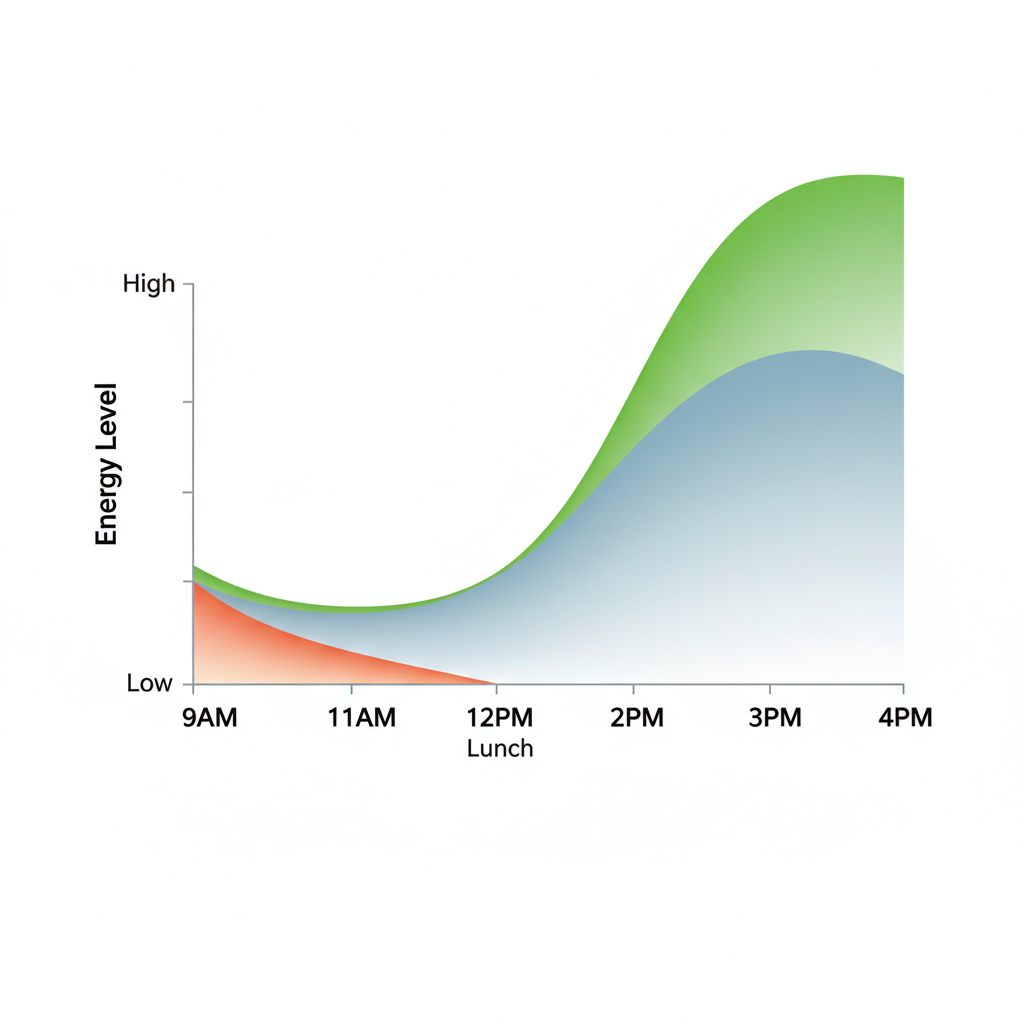
People are not machines. Their energy follows a predictable pattern:
- Morning (high energy): Schedule cognitively demanding work. Complex analysis, difficult prioritization.
- Late Morning (peak energy): Your golden window, typically 10:00 AM to noon. Put your most important core activity here.
- Right After Lunch (low energy): Don't schedule a 45-minute presentation here. Use a physical or highly interactive activity: gallery walks, dot voting, anything that gets people out of their chairs.
- Mid-Afternoon (recovering energy): Good for convergent activities. Synthesize and decide.
- Late Afternoon (declining energy): Wrap-up, next steps, feedback. Keep it crisp.
For remote workshops, compress everything. Peak engagement drops after 90 minutes. Build in a 10-minute break every 60–75 minutes, and never go longer than three hours without a significant break.
Time Boxing: How Long Activities Actually Take
New facilitators consistently underestimate how long activities take:
| Activity | Estimated time | What actually happens |
|---|---|---|
| Introductions + ground rules | 10–15 min | People talk longer than you expect |
| Individual brainstorming (silent) | 5–8 min | More than 8 minutes and quality drops |
| Small group discussion | 15–20 min | Less than 15 and groups barely get started |
| Gallery walk + dot voting | 15–25 min | Depends on number of items to review |
| Affinity mapping | 20–30 min | Always takes longer than you think |
| Whole-group decision discussion | 15–25 min | Set a hard stop or it expands indefinitely |
The 80% rule: Fill only 80% of your available time with planned activities. The remaining 20% gets absorbed by transitions, questions, and the inevitable moment when an activity sparks a discussion you didn't plan for but the group clearly needs.
Warm-Up Activities (Icebreakers)
Never skip the warm-up. It feels like wasted time when you've got a packed agenda. I've skipped it twice. Both times, I spent the first forty minutes of the "real work" getting the same thing a warm-up would've given me in ten.
One-Word Check-In (5 minutes)
Go around the room. Each person says one word that describes how they're feeling right now. That's it. Fast, low-pressure, and gives you an instant read on the room's energy.
Hopes and Fears (10–15 minutes)
Each person writes on two sticky notes: one hope for the workshop (green note) and one fear (pink note). Post them on the wall. Quickly cluster and acknowledge them.
Need more options? Over 50 additional icebreakers, filterable by group size and energy level.
workshopr.io/icebreakersarrow_forwardPre-Built Agenda Templates
Here are two ready-to-use agenda structures for the most common first-timer scenarios.
Discovery Workshop Agenda
Goal: Understand the problem space, align on what you know and don't know.
- Stakeholder Map (20–25 minutes): Each person silently lists all the people affected by the problem on sticky notes (one per note), then the group clusters them on a board using concentric circles: inner ring for primary stakeholders, outer ring for secondary. Discuss gaps and surprises.
- Journey Mapping (45–60 minutes): Define a specific user scenario. Across a horizontal timeline, map the steps the user takes. Below each step, capture what they're thinking, feeling, and doing. Below that, capture pain points and opportunities. Start individually (10 min), then build a shared version as a group (30–40 min).
- How Might We (15–20 minutes): Take the pain points from your journey map. Reframe each one as a "How might we…" question. Example: Pain point "Users can't find the settings page" becomes "How might we make settings discoverable without cluttering the navigation?"
Prioritization Workshop Agenda
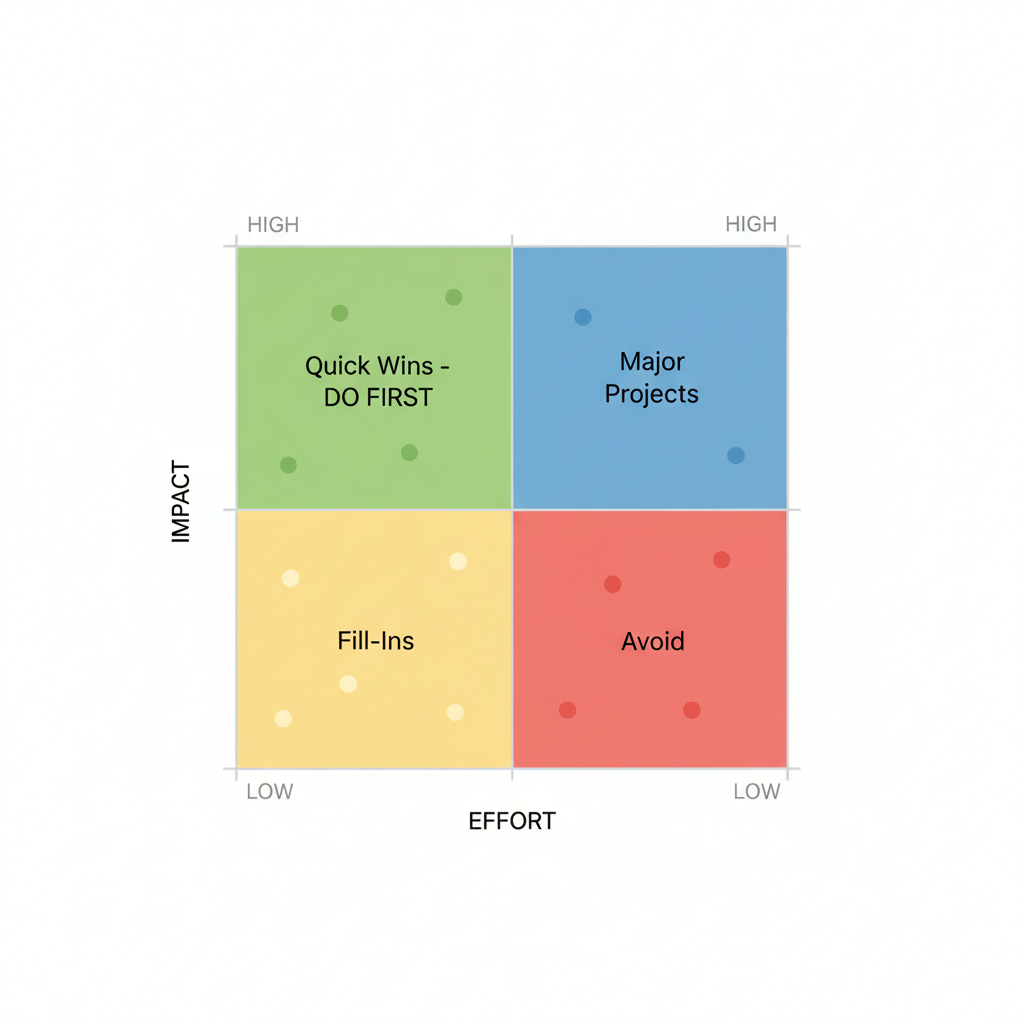
- Impact/Effort Matrix: Draw a 2×2 grid: high impact / low impact on the Y axis, low effort / high effort on the X axis. The group places each idea or feature on the grid. Start with silent individual placement, then discuss items where people placed them in very different quadrants. Focus energy on the "high impact / low effort" quadrant.
- Dot Voting (10–15 minutes): Give each person 3–5 dot stickers. They place dots on the items they think are most important. No rules about spreading dots; putting all dots on one item is valid. Count and rank.
- MoSCoW Sorting (20–25 minutes): Create four columns: Must Have, Should Have, Could Have, Will Not Have (this time). The group sorts items through discussion. Push back with: "If everything is a must-have, nothing is."
Want more agenda templates? The Workshopr planner builds timed agendas for you: pick a goal, drop in proven activities, and share the result with the room.
Open the free plannerarrow_forwardCool-Down and Wrap-Up Activities
- Recap the Decisions (5–10 minutes): Walk through every decision. State each one clearly. Ask: "Does anyone disagree with how I have captured this?"
- Parking Lot Review (5 minutes): Review off-topic but important items. Assign an owner and a follow-up date, or acknowledge it won't be addressed.
- Next Steps Round (5–10 minutes): Each person states one specific action they will take, with a deadline. Write these down visibly.
- One-Word Close (3 minutes): If you hear "energized" and "clear," you did your job. If you hear "confused," you have follow-up to do.
Sample Full-Day Agenda Template
Workshop: [Name] | Objective: [By the end of this workshop, we will have…]
| Time | Activity | Duration | Purpose |
|---|---|---|---|
| 9:00 AM | Arrival, coffee, informal chat | 15 min | Settle in |
| 9:15 AM | Opening: Context, objective, ground rules | 15 min | Align the group |
| 9:30 AM | Warm-up: Hopes and Fears | 15 min | Get people talking |
| 9:45 AM | Core Activity 1: [Discovery/Understanding] | 45 min | Frame the problem |
| 10:30 AM | Break | 15 min | Recharge |
| 10:45 AM | Core Activity 2: [Deepest thinking work] | 60 min | Peak energy window |
| 11:45 AM | Share-out and Discussion | 30 min | Align on findings |
| 12:15 PM | Lunch | 45 min | Real break, no working lunch |
| 1:00 PM | Energizer Activity (physical/interactive) | 15 min | Beat the post-lunch dip |
| 1:15 PM | Core Activity 3: [Ideation/Generation] | 45 min | Create options |
| 2:00 PM | Gallery Walk + Dot Voting | 25 min | Surface top ideas |
| 2:25 PM | Break | 10 min | Recharge |
| 2:35 PM | Core Activity 4: [Prioritization/Decision] | 40 min | Converge on decisions |
| 3:15 PM | Synthesis: Capture decisions and outputs | 20 min | Document results |
| 3:35 PM | Next Steps Round | 15 min | Assign ownership |
| 3:50 PM | One-Word Close + Feedback | 10 min | End strong |
| 4:00 PM | End |
Day 3 · The day before
Setup and Prepare
The environment you create — physical or digital — directly affects the quality of the work. A well-prepared space tells participants, "This is going to be different from a regular meeting." A poorly prepared one tells them, "This person didn't think this through."
Physical Space Essentials
Room Size
You need more space than you think. A standard conference room that seats 10 is too cramped for a workshop with 8 people. You need room for people to stand, walk around, and cluster at different walls.
Wall Space
This is the number one thing new facilitators underestimate. You need large, flat surfaces to post sticky notes and display work. If the room has no usable wall space, bring foam core boards or large paper rolls.
Layout
For your first workshop, use the Pod Layout.
The Pod Layout
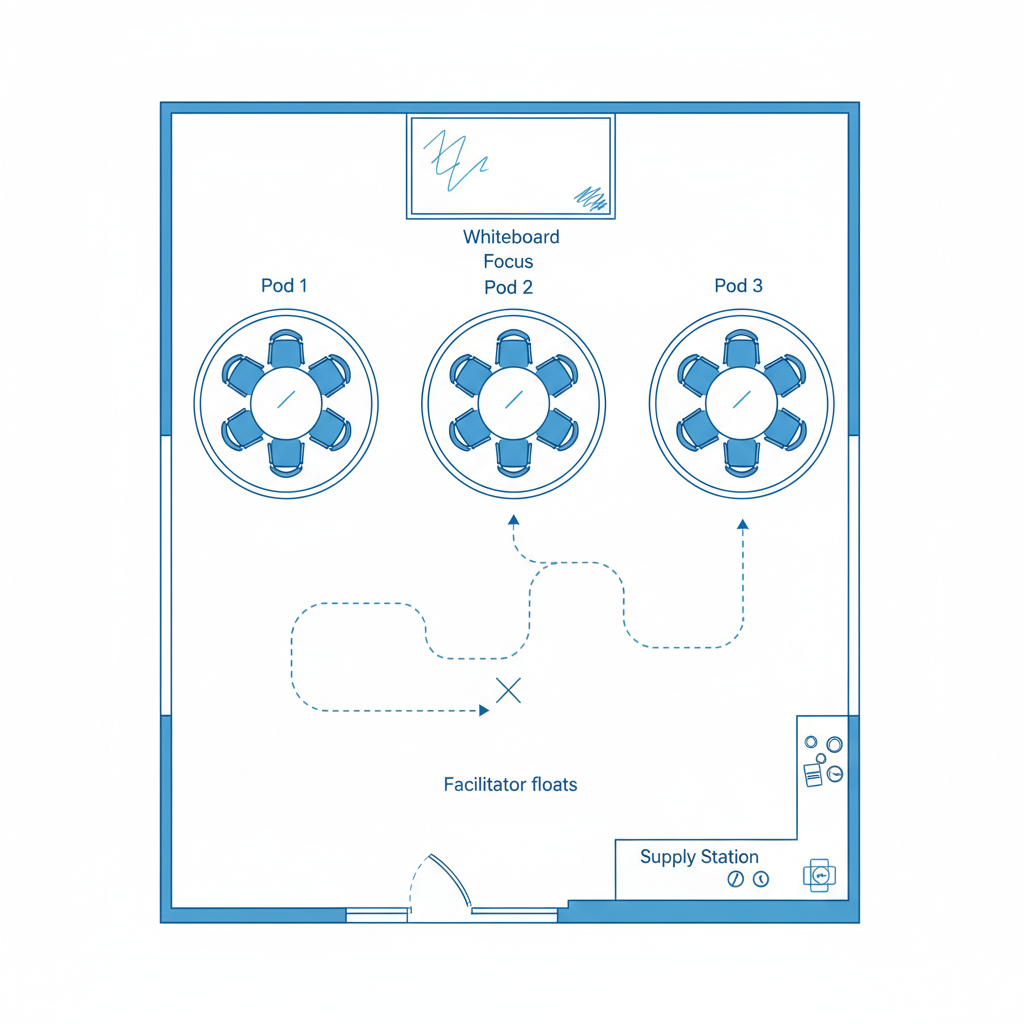
Four to six tables arranged in small clusters (pods). Each pod has room for four to six people. Chairs are pushed around the table, not facing the front. A central wall or whiteboard at the front serves as a focal point, but the real action is distributed across the pods.
Materials & Space Checklist
Here's a preview of the essentials. The full checklist covers writing supplies, facilitation tools, tech setup, and comfort items.
The essentials 6 of 25+ items
Want the book in your kit on setup day? The Kindle edition travels with you: phone, tablet, or e-reader, no wifi required.
Buy on Kindlearrow_forwardDigital Tools Setup for Remote Workshops
You need three things: a video call, a shared canvas, and a timer.
Shared Digital Canvas (Miro, FigJam, or similar)
- Set up the board before the session with templates and instructions already in place
- Pre-populate reference material (research findings, design screenshots, data)
- Create a "sandbox" area where people can practice during the warm-up
- Lock any frames you don't want people accidentally moving
Backup plan: Have a shared Google Doc ready in case the canvas tool goes down.
Preparing Your Facilitation Kit
Your facilitation kit is a personal reference you keep with you. It's your safety net. Create a single document that includes:
- The agenda with time blocks and transition notes
- Word-for-word instructions for each activity (you won't read them verbatim, but having them prevents fumbling)
- Your backup plan for each activity
- A list of probe questions for when discussion stalls ("What would our biggest competitor do here?" / "What are we afraid to say out loud?")
- Participant names and roles (so you can call on people by name)
Your Day 3 Checklist 7 items
Day 4 · Workshop day
Facilitate
You've planned the workshop, designed the agenda, and set up the room. Now you're standing in front of a group of people looking at you, waiting.
I still get a jolt of adrenaline at this moment. Fifteen years in, hundreds of workshops. It never fully goes away. But having a script for the first fifteen minutes makes the adrenaline work for you instead of against you.
Opening the Workshop: The First 15 Minutes
Minutes 0–3 · Welcome and Human Moment
Minutes 3–7 · Context and Objective
Minutes 7–10 · Agenda Overview
Walk through the agenda quickly. Don't explain each activity in detail.
Minutes 10–15 · Ground Rules
Propose three to four and ask if the group wants to add any:
- Phones away. Check them during breaks, not during activities.
- One conversation at a time. Side conversations split the group's attention.
- Yes, and. Build on ideas before critiquing them.
- Timebox respect. When the timer goes off, we move on.
Post these on the wall. They give you permission to redirect throughout the day.
Time Management Techniques
Use a visible timer for every activity.
Say the time out loud when you start and give warnings ("Two minutes left").
Have a parking lot.
When someone raises an important but off-topic point, write it on a sticky note and put it on the "parking lot" section of the wall.
Know what to cut.
Before the workshop, mark one activity in your agenda as "cuttable." If you run behind, this is the one you drop.
How to Give Clear Activity Instructions
Unclear instructions are the single most common facilitation mistake. Use this four-step method every time:
- State the purpose. "The goal of this next activity is to generate as many solutions as possible without judging them."
- Describe the mechanics. "You'll work individually. Take sticky notes and a marker. Write one idea per note."
- Set the time. "You'll have 8 minutes. I'll give you a 2-minute warning."
- Show an example. Hold up a pre-prepared sticky note. "Here's an example of what a good note looks like."
Always ask for questions after the example, not before. The example answers most of them.
Core Techniques, Step by Step
Dot Voting
10–15 minWhat it does: Quickly surfaces the group's priorities from a large set of options.
- Post all items on the wall.
- Give each person 3–5 dot stickers. Say: "Place them on the items you think are most important. You can put multiple dots on the same item. No talking during voting."
- Set a timer for 5 minutes.
- Count the dots. Rearrange items in order.
- Discuss the top 3–5. Ask: "Any surprises? Anything that didn't get votes but you think is critical?"
Affinity Mapping
20–30 minWhat it does: Organizes a large number of individual ideas into themes.
- Start with a wall full of sticky notes from a previous activity.
- Say: "Everyone come up to the wall. Read the notes silently. If you see two notes that seem related, move them next to each other. No talking yet."
- Set a timer for 10 minutes of silent sorting. It feels chaotic. That's fine.
- Once clusters form, ask the group to name each cluster.
- Review the themes together. "Are any of these actually the same theme? Are any missing?"
Crazy 8s
~10 minWhat it does: Forces rapid ideation through time pressure and sketching.
- Give each person a blank sheet of paper. "Fold this in half three times so you get eight panels."
- "You'll have 8 minutes total, one minute per panel. When I say 'switch,' move to the next panel. The point is speed, not quality."
- Start the timer. Call "switch" every 60 seconds. Keep the energy up: "Don't overthink it. First thought, best thought."
- After 8 minutes: "Circle the one idea you're most excited about. You'll have 60 seconds to pitch it to the group."
How Might We
15–20 minWhat it does: Reframes problems as opportunities for design.
- Present a set of problem statements or pain points.
- "For each problem, rewrite it as a question starting with 'How might we…' Write each on its own sticky note."
- Demonstrate: "If the problem is 'users abandon checkout when they see the shipping cost,' the HMW could be 'How might we make shipping costs feel fair?'"
- Give 8–10 minutes for individual writing. Aim for at least 3 per person.
- Post all HMW notes on the wall and cluster similar ones.
Managing Group Dynamics
The Silent One
Don't call them out publicly. Use structured activities that require everyone to contribute (silent writing, round-robin sharing).
Approach them during a break: "I'd love to hear your perspective on [topic]."
The Dominator
"I want to make sure we hear from everyone. Let's go around the room, 30 seconds each."
If it continues: "Thanks, [name]. I want to hold that thought. [Other name], what's your take?"
The Naysayer
Acknowledge their concern directly. Skeptics become allies when their concerns are taken seriously.
"You're raising a real risk. Let's capture it."
The Side-Talker
Walk toward it. Your physical presence usually ends it.
If not: "Sounds like you two are onto something. Want to share with the group?"
The next time someone dominates the conversation or the room goes dead silent, you won't have time to Google "what to do."
Workshopr Intervention Cards: 40+ tactics for the moments that throw first-timers off. Each card gives you the situation, what to say out loud, and a backup move if the first one doesn't land. Free on Workshopr, ready before your next session.
Open the Intervention Cardsarrow_forwardWhen to Diverge vs. Converge
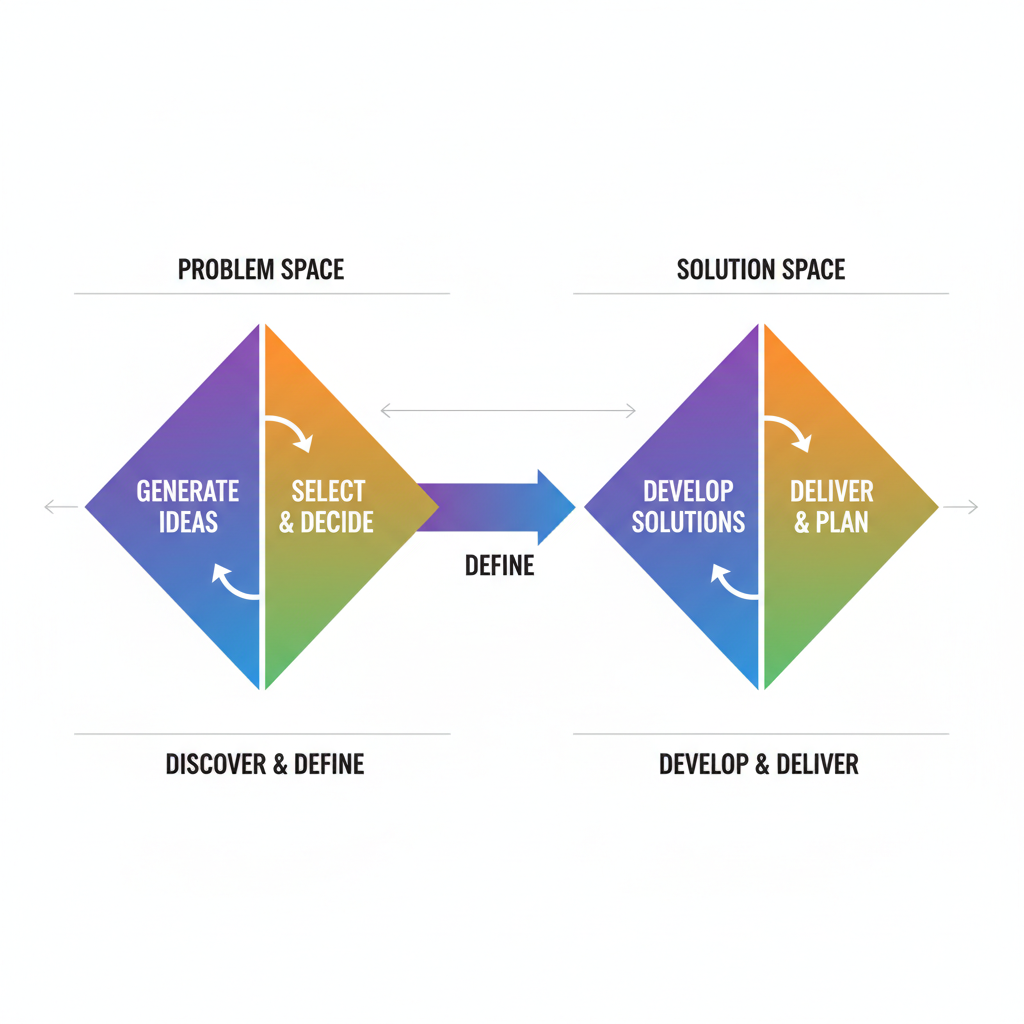
Every workshop alternates between two modes:
- Diverge: Generate options, expand thinking, welcome wild ideas. Don't evaluate or critique. Use brainstorming, Crazy 8s, How Might We.
- Converge: Narrow down, make decisions, choose a direction. Apply criteria, vote, debate, and commit. Use dot voting, impact/effort matrices, structured discussion.
The most common facilitation mistake is converging too early. If the group jumps to evaluating ideas during a brainstorm, gently redirect:
Explicitly signal mode changes:
Synthesis: Turning Sticky Notes into Outcomes
A wall full of sticky notes isn't an outcome. Your job is to help the group turn raw material into something actionable.
During the workshop (last 30 minutes):
- Walk the group through the wall. "Here's what I'm hearing. [Summarize in one sentence.] Does that capture it?"
- Write each decision on a fresh sticky note in large, clear text.
- For each output, ask: "Who owns this? What is the next step? By when?"
- Photograph everything before anyone touches the wall.
When a Team Gets Unstuck
I once coached a design ops manager through a decision-making session for a team that had been debating a recommendation engine approach for six weeks. Every meeting ended the same way: the data scientist wanted one approach, the PM wanted another, the engineer wanted a hybrid.
She figured out before anyone walked in: they weren't arguing about technical approaches. They were arguing about unstated priorities. The data scientist valued accuracy. The PM valued speed to market. The engineer valued maintainability.
She designed her agenda around surfacing the hidden conflict. Silent individual writing: "What's the single most important thing this engine must do well?" and "What's your biggest fear about getting this wrong?" The patterns were immediate once the answers went on the wall.
Then a forced ranking: five criteria: accuracy, time-to-market, maintainability, scalability, and customer trust.
The conversation shifted from "my approach vs. yours" to "given our shared priorities, which approach serves both?" Three hours to resolve what six weeks of meetings couldn't. Not because the facilitator had a technical opinion; she didn't. Because she had the right technique: surface the real disagreement first.
Bonus chapter
Get Buy-In Fast
You know a workshop would solve the problem. But you have to convince the people who control the calendar.
Frame it this way:
The template email:
Hi [Stakeholder/Group],
I'm proposing we run a focused workshop on [specific problem/decision] on [date], [time], [location].
Why now: We need to make a decision on [topic]. The right answer depends on input from multiple disciplines.
Who needs to be there: [List specific roles — 5–10 people max]
What we'll deliver: A documented decision, the reasoning behind it, and a list of next steps with owners.
Why this matters: If we make this decision without alignment, we risk rework down the line.
This workshop ensures we move together. Let me know if you can commit to being there.
Need help handling objections? Book 4, They'll Never Say Yes, is a full playbook of rebuttals for "we don't have time," "the design team can figure this out," and more. Read it free online, or take it with you on Kindle.
Read Book 4 freearrow_forwardWhat to do if they still say no:
Make your recommendation. But document that you offered a workshop and they declined. When the direction shifts, and it almost always does, you'll have clear documentation that you tried to surface alignment early. Next time, they'll say yes.
After the room empties
What Happens Next
The workshop is done. You facilitated your first design workshop, and the room didn't burn down. But what happens in the next 48 hours matters more than the session itself. I've run workshops that felt electric in the room and produced nothing lasting, because I didn't follow up.
Quick Post-Workshop Checklist Complete within 24 hours
Want this on your phone the morning after? The Kindle edition keeps the follow-up playbook with you while the 24-hour clock is ticking.
Buy on Kindlearrow_forwardSend the Follow-Up Email
Send within 24 hours.
Hi everyone,
Thank you for your time and energy in yesterday's workshop. Here's what we accomplished and what happens next.
Key decisions: [Decision 1] · [Decision 2] · [Decision 3]
Action items:
| Action | Owner | Deadline |
|---|---|---|
| [Action 1] | [Name] | [Date] |
| [Action 2] | [Name] | [Date] |
| [Action 3] | [Name] | [Date] |
If anything in this summary doesn't match your understanding, please reply. I'll check in on action item progress on [date, about one week].
Your First One Is Done
Take a breath. Write down three things that worked and one thing you'd change. Not a journal entry; four bullet points. This is how you build your facilitation instinct.
I still do this after every workshop. My notes from that first terrible session fifteen years ago? "Talked too much. Should've used pairs. The engineer who dominated — next time, give him a role." Those three bullets shaped how I facilitate to this day.
The best facilitators aren't the ones who ran one perfect session. They're the ones who kept showing up, getting slightly better each time.
Going Deeper
This book gave you everything you need to survive your first workshop. There's more to learn if you want to thrive.
- Facilitating With Intention (Book 2 of this series) goes deep on the mindset of great facilitators, advanced agenda design, all five space layouts, and the complete reference cards for your next 10 workshops.
- Did It Work? (Book 3 of this series) shows you how to measure workshop ROI, prove value to stakeholders, and scale facilitation across your organization.
Appendix · Print this page
Emergency Facilitator's Cheat Sheet
Print this page. Keep it in your facilitation kit.
The 4-Step Instruction Method
- Purpose: "The goal of this activity is to…"
- Mechanics: "Here's how it works…"
- Time: "You have X minutes. I'll warn you at 2 minutes."
- Example: Hold up a prepared example. "Questions?"
When X Happens, Do Y
| When this happens… | Do this |
|---|---|
| Nobody is talking | Don't fill the silence. Count to 10. If still nothing: "Take 60 seconds to write your answer, then we'll share." |
| One person dominates | "Let's go around the room, 30 seconds each." During a break, ask them privately to help draw out quieter voices. |
| Circular debate | "I notice we're going back and forth. Let's put both positions on the wall and dot-vote." |
| Activity finishes early | "Now that we have these, let's spend 5 minutes grouping them by theme." |
Back matter
The Workshopr Facilitation Series
This is Book 1 of 6 in The Workshopr Facilitation Series.
The Series
Run Your First Design Workshop in 72 Hours
The crisis-mode sprint plan. Everything you need to plan, prepare, and facilitate a workshop this week.
Hold the Room — The Complete Facilitator's Playbook
The comprehensive playbook. Deep dives on the facilitator mindset, advanced agenda design, all five space layouts, and the complete reference cards for your next 10 workshops.
Did It Work? — Measuring Workshop Impact
The measurement and scaling guide. How to prove workshop ROI, convince stakeholders, and build facilitation into your organization's DNA.
They'll Never Say Yes — Scripts to Get Your Workshop Approved
Word-for-word scripts for the five objections you'll hear most, plus a ready-to-send stakeholder email that's landed a yes in organizations from startups to Fortune 500s.
Get Out of the Car — A Facilitator's Guide to Imposter Syndrome
You're not a fraud — you're just new at this. Why imposter syndrome hits facilitators harder than most roles, the three situations that trigger it most, and the practical reframes that turn nervous energy into the thing that actually makes you good at this job.