Free
$0 forever
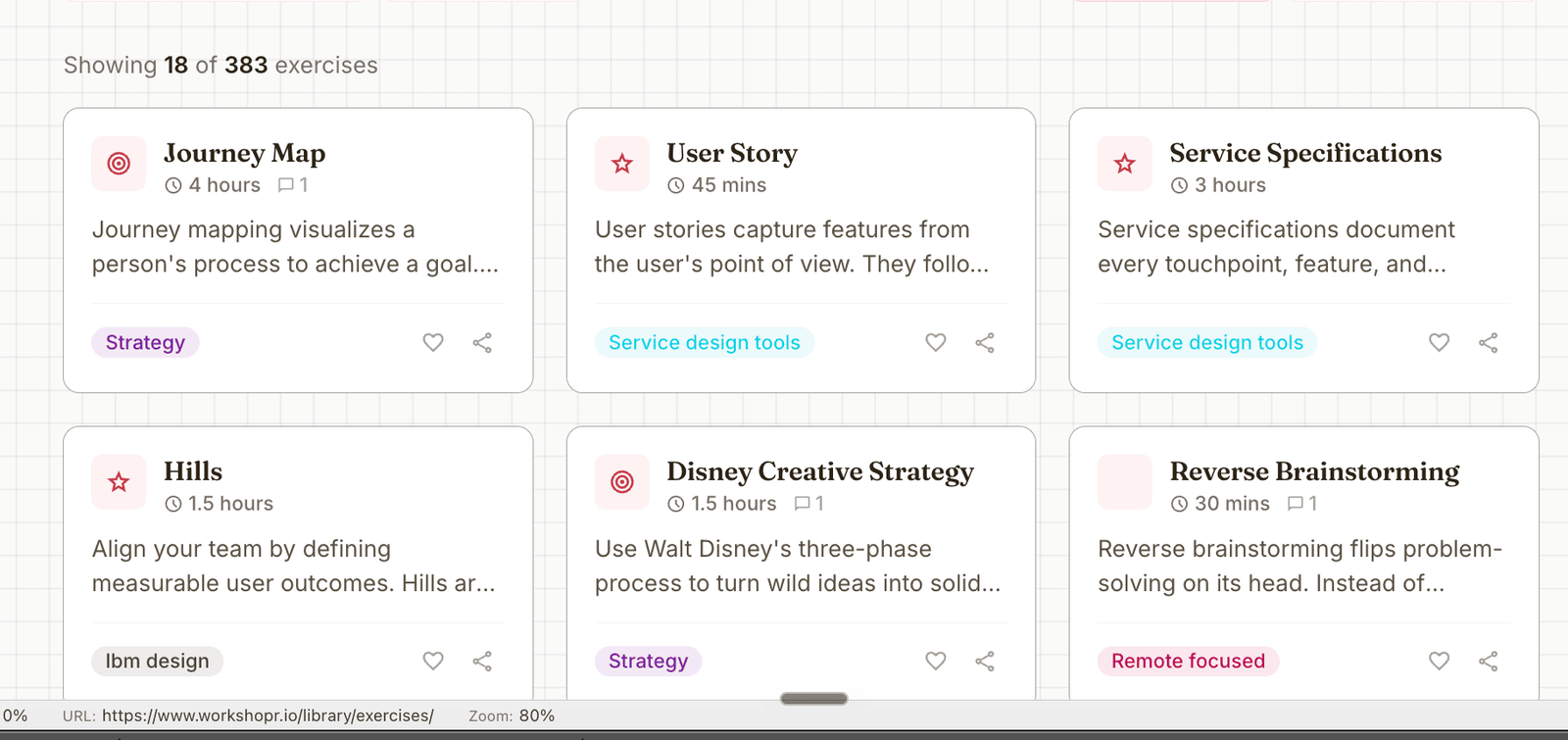
- The full library: 380+ exercises, 57+ icebreakers, 50+ workshops
- Academy and Tips
- Intervention cards
- The pre-read, hybrid and post-workshop toolkits
Start typing to search the whole site.
Pro $19/mo · free tier is permanent
The case, the agenda, the room, the write-up. Usually four tools and five weeks. Here, one surface.
Pro is free through September. No card needed.
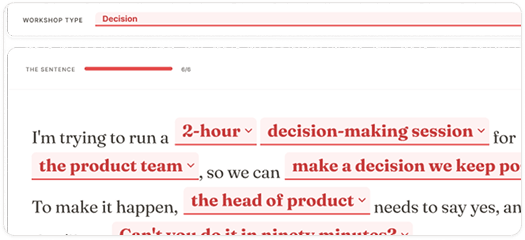
Strategize
Say what the day has to change. Out comes the email, a rehearsal of the pushback, and a straight go or no-go.
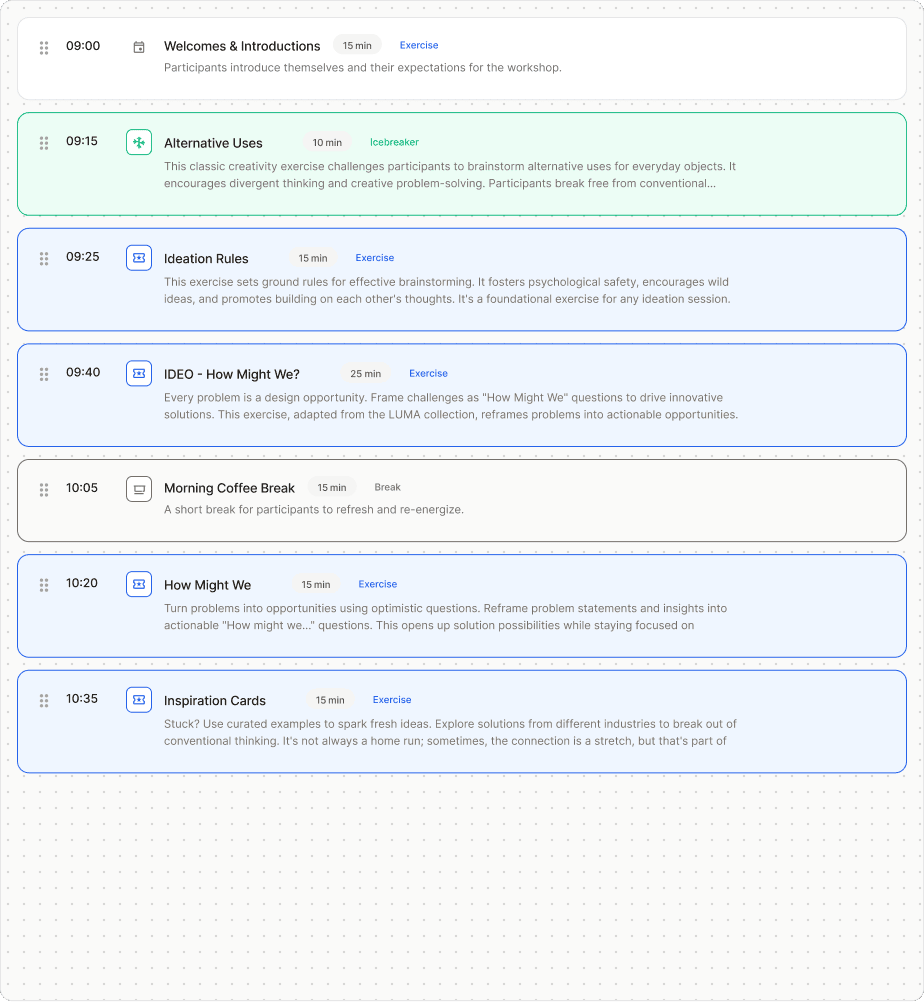
Plan
Drag exercises and breaks into order. The arc shows where the afternoon dies.
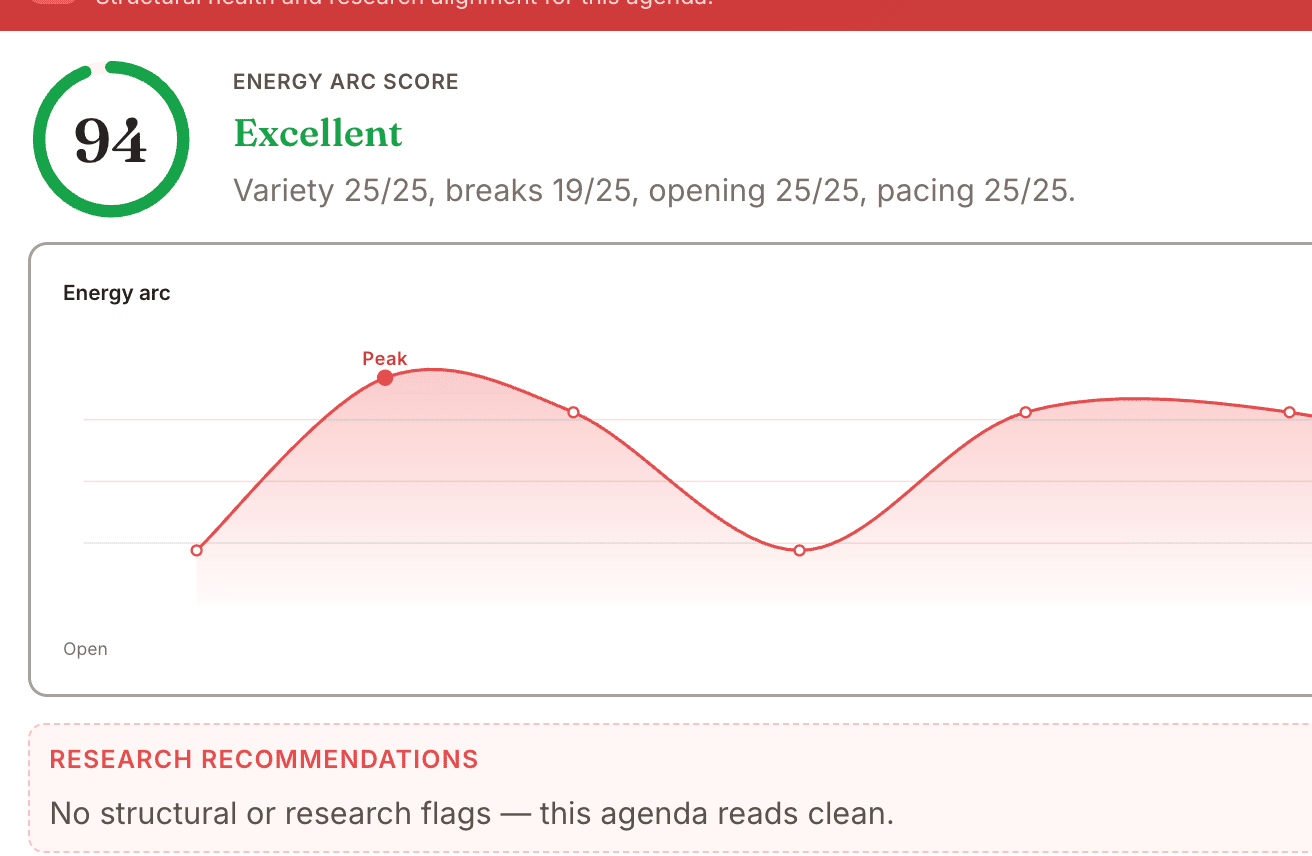
Energy Arc
A second opinion on the shape, not the content.
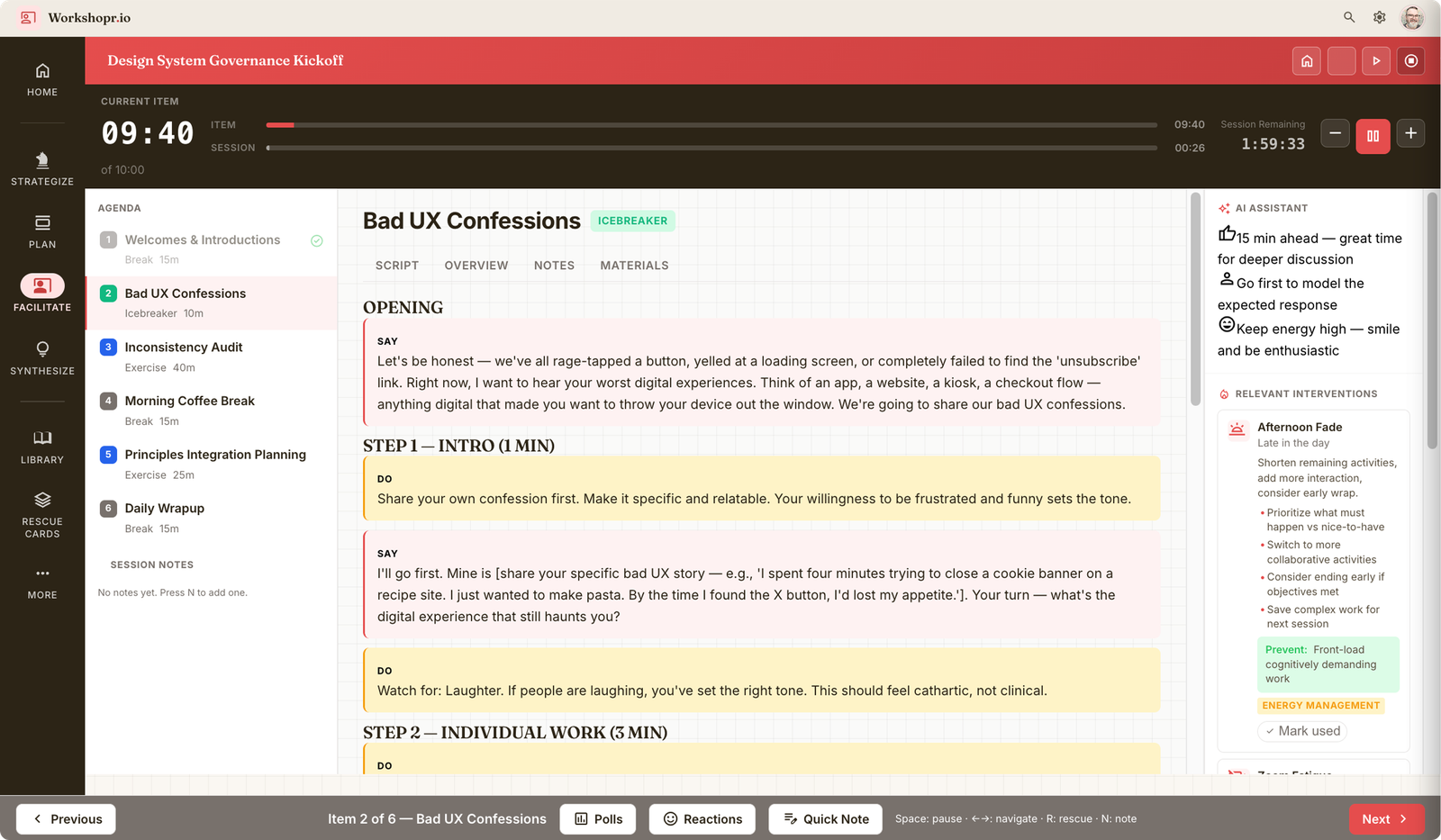
Facilitate
Timer, script and a note bar. Participants react and answer polls from their phones, and every reaction lands against the item that caused it.
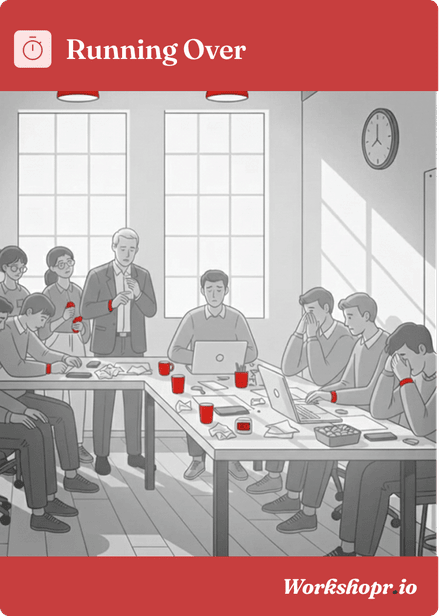
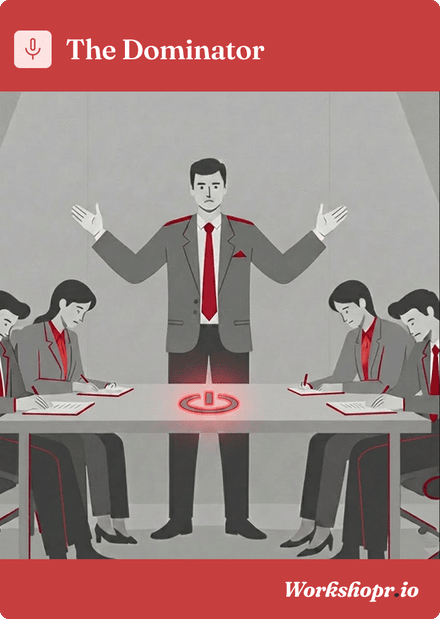
Intervention cards
One tap, one thing to say next. The part of facilitating nobody else helps with.
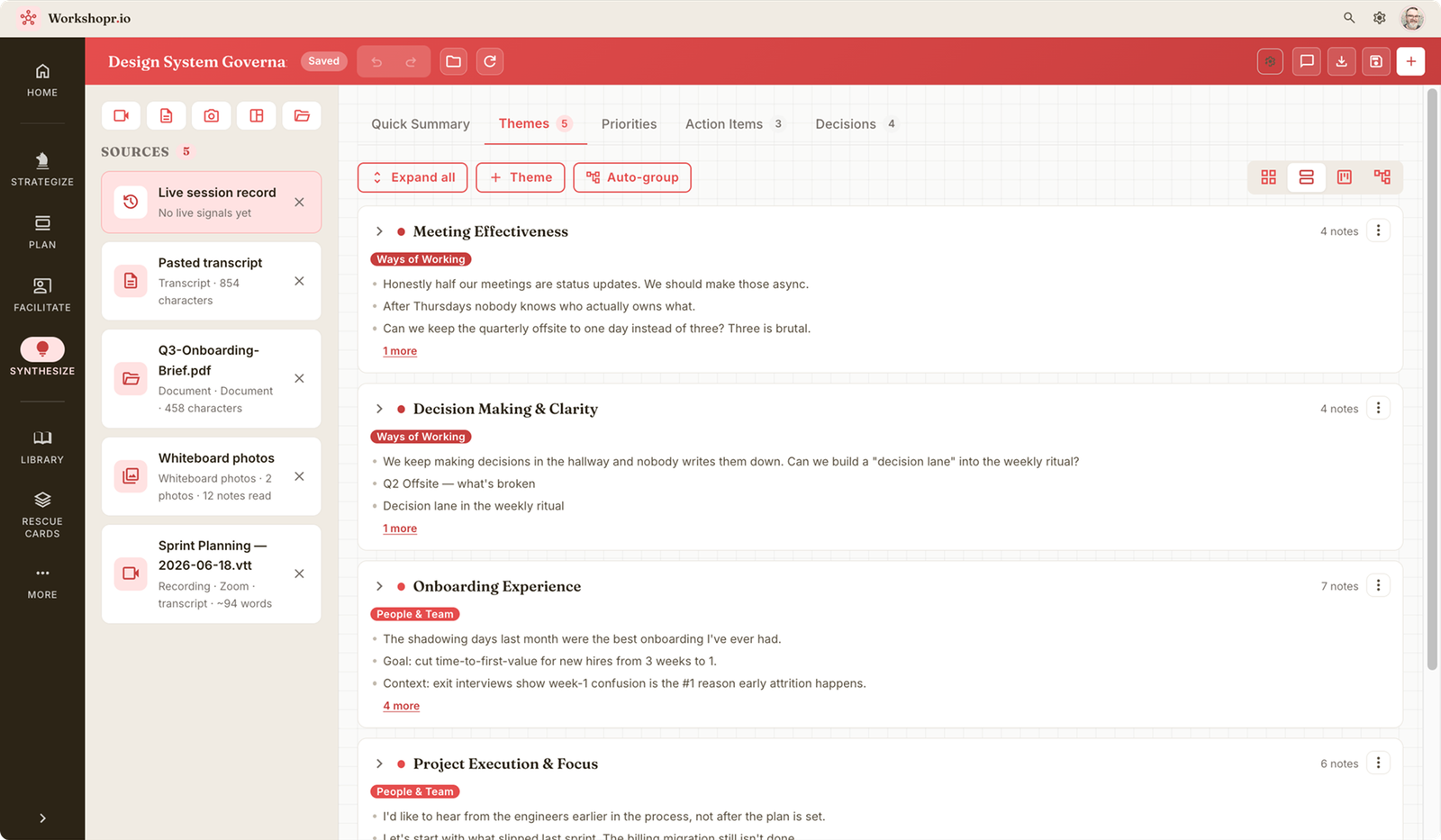
Synthesize
The photos, your mid-session notes and the poll results are already in the record. A one-pager goes out tonight.
Library
Instructions, materials and tips on every entry. Free forever, on every plan.
$0 forever
$19 per month, or $16 paid yearly
I used to spend a full afternoon building an agenda. Last week I built a three-hour offsite in about twenty minutes and it was better than the one I'd have written.
The intervention cards are the part I didn't know I needed. Two of them saved a workshop that was going sideways in the second hour.
We stopped reinventing the same retro every quarter. The library gave our leads something to start from instead of a blank Miro board.
Workshop tips picked for the rooms you actually run. Three times a week. No "10 tricks for hybrid" listicles, no synergy slides, no hot takes dressed as frameworks.