Strategy & Planning Workshops

Leave with a plan,
not another meeting.

Exercises for vision setting, roadmap prioritization, stakeholder alignment, and OKR workshops. Structure that forces decisions instead of deferring them.
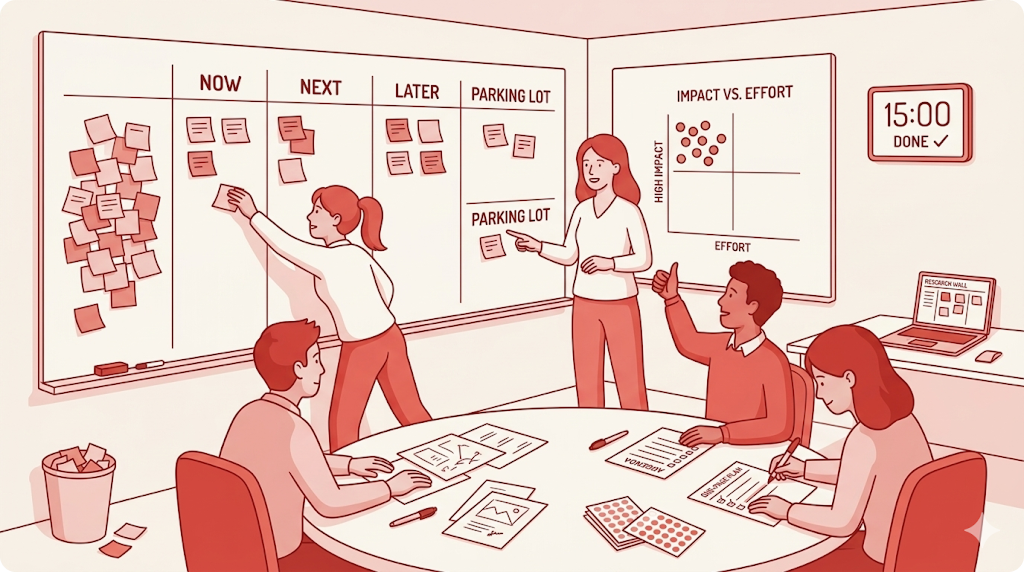
Strategy and planning workshop session

Featured exercises for strategy sessions

Activities that turn abstract goals into concrete plans — without the usual four-hour argument about priorities.

Future Visioning Workshop

A ready-made workshop template from the Workshopr library. Load it into the Planner and make it yours.

Future Visioning Workshop

4 days • 9:00 AM start
9:00
Welcome & Introductions
Facilitator introduction and agenda overview
10 min
9:10
App For Aliens
Design an app for aliens to stretch imagination and explore unfamiliar perspectives.
15 min
9:25
Future Vision
Your team needs a north star—a compelling vision of where you're heading that inspires action and guides decisions. Future Vision Exercise creates a detailed, emotionally resonant picture of your desired future state 3-5 years out. This 3-hour exercise transforms vague aspirations into specific, vivid descriptions that teams can rally around and use to align their work. This works best at strategic inflection points—new product launches, organizational changes, market entries. The magic happens when teams move from 'we want to be successful' to 'here's exactly what success looks like.' Reality check: requires genuine strategic clarity. If leadership isn't aligned on direction, visioning becomes political theater. Expect creative energy during vision creation and grounding discussion during feasibility checks. You'll know it's working when teams can describe the future in concrete details and start making decisions based on the vision.
30 min
9:55
Cover Story Mock-Up
Part of <strong>LUMA</strong> collection. ---Imagine your idea is so successful it makes magazine covers. What would the headline say? This method helps you envision success and work backward. Creating a mock magazine cover forces you to articulate your vision clearly and think about what would make your idea newsworthy.
30 min
10:25
Future State Journey Mapping
You've diagnosed current experience problems—now it's time to envision what the experience should be. Future State Journey Mapping creates a detailed picture of the ideal customer journey after improvements, showing what each touchpoint, emotion, and outcome looks like when you've addressed pain points and seized opportunities. This 90-minute exercise transforms the laundry list of improvements into a cohesive vision of the target experience, helping teams align on what 'good' looks like before they start building. This works best after you've identified pain points and opportunities but before detailed design work begins. It's particularly valuable when multiple teams need to coordinate improvements, when stakeholders need to align on the vision, or when you're making the business case for experience investments. The magic happens when teams realize that solving individual problems isn't enough—the future state needs to be an intentionally designed, coherent experience. Reality check: future state mapping requires balancing aspiration with feasibility. Make it too ambitious and it becomes fantasy, too conservative and it doesn't inspire. The facilitator's job is holding that tension. Expect creative energy during visioning (teams love designing better experiences) and grounding discussions as reality checks emerge. The 90-minute duration enables both imagination and feasibility assessment. You'll know it's working when teams start identifying dependencies between improvements and sequencing what needs to happen first.
30 min
10:55
Morning Coffee Break
Refreshments and informal networking
15 min
11:10
Strategic Backcasting
Your team knows where you want to be in 2030, but the path from here to there feels impossibly complex. Strategic Backcasting flips traditional planning on its head: instead of projecting forward from today ('What could we achieve?'), you start with your desired future state and work backward ('What must be true for this to happen?'). This 3-hour exercise transforms aspirational visions into concrete roadmaps by systematically identifying the milestones, decisions, and conditions necessary to reach your goal. Backcasting works brilliantly when you have a clear, ambitious destination but unclear path—launching a new business model, achieving sustainability targets, entering a new market, or driving transformational change. It's particularly powerful for goals that require systemic change or long time horizons (5-10+ years), where simple extrapolation from current trends won't get you there. The magic happens when teams stop asking 'Is this possible?' and start asking 'What would make this possible?'—shifting from feasibility concerns to creative problem-solving. Reality check: backcasting only works if you have genuine commitment to the future state. If leadership is hedging or the goal is negotiable, use scenario planning instead. Expect an energizing session that feels more like detective work than traditional planning. Energy stays high throughout because teams are solving a puzzle: how do we get from here to our desired future? The 3-hour duration allows teams to work backward through multiple time horizons (5 years, 3 years, 1 year, 6 months) with sufficient detail to make the path believable. You'll know it's working when teams start identifying concrete actions for next quarter that connect directly to the 10-year vision.
30 min
11:40
IDEO - Create A Roadmap
Strategic planning method to create a visual timeline and plan for implementing your solution over time.Part of <strong>LUMA</strong> collection. ---
30 min
12:10
Playback
A Playback is a session where participants present their work, key insights, and takeaways from an activity or the entire workshop. It serves to create alignment, ensure shared understanding, and communicate the value of the work completed.
30 min
12:40
Daily Wrap-up
Key takeaways, reflections and next steps
10 min

Go deeper on strategy facilitation

Frameworks, tips, and guides for running sessions that produce real alignment.

Plan your next
strategy session

Open the Planner, pick your exercises, and build an offsite agenda that ends with a plan — not a parking lot of ideas.

Plan Your Strategy Session