01
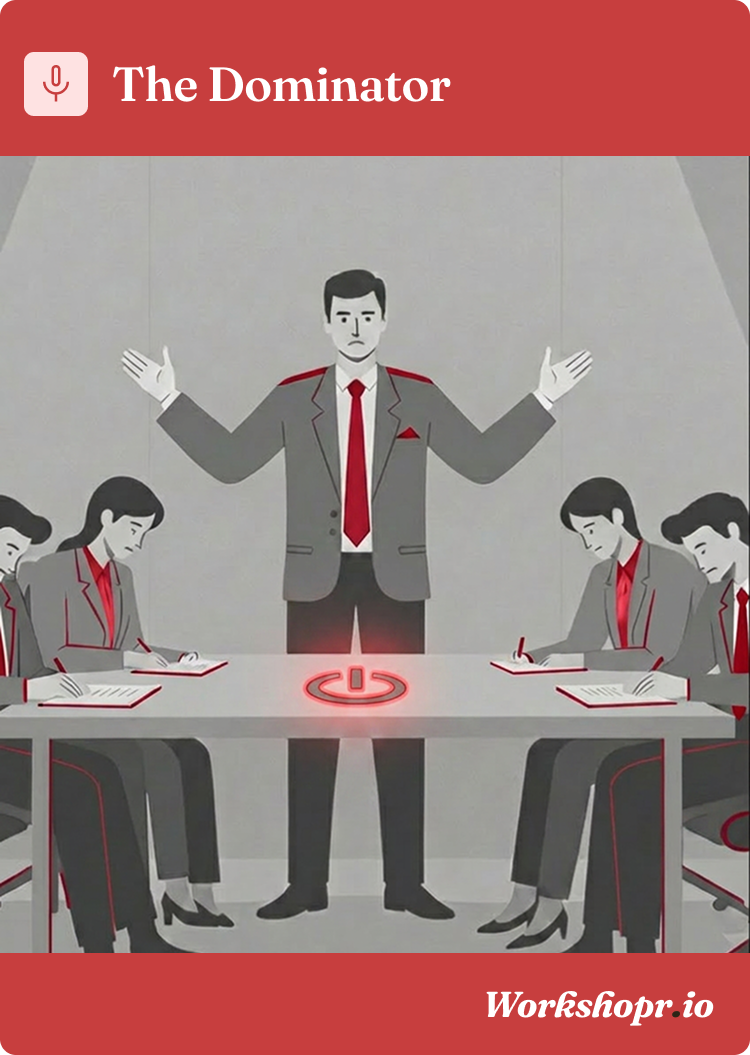
One person monopolizing discussion
The Dominator
Thanks [Name], great points. Let's hear from others - [quiet person], what's your take?
Pull this cardStart typing to search the whole site.
For the rooms where one person is running the show.
10 moves
One person monopolizing discussion
Thanks [Name], great points. Let's hear from others - [quiet person], what's your take?
Pull this card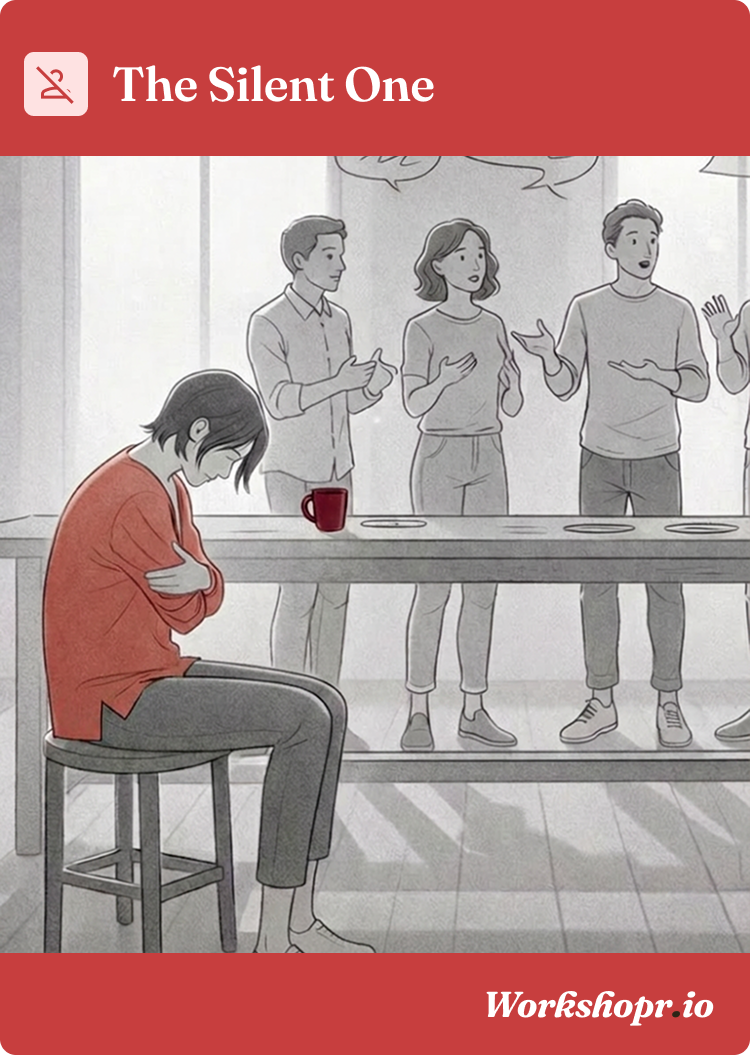
Participant hasn't spoken
Try pair-share first, then report out. Or use written responses before discussion.
Pull this card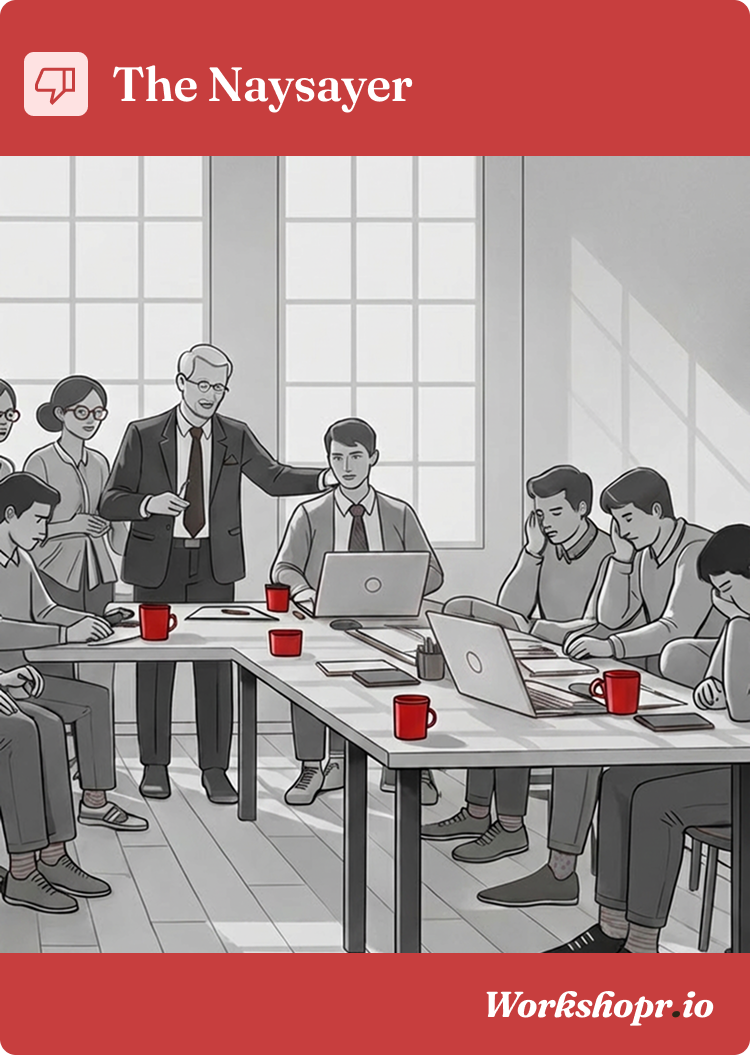
Constant negative pushback
I hear your concerns. Let's park those and explore 'what if it could work?' for 5 minutes.
Pull this card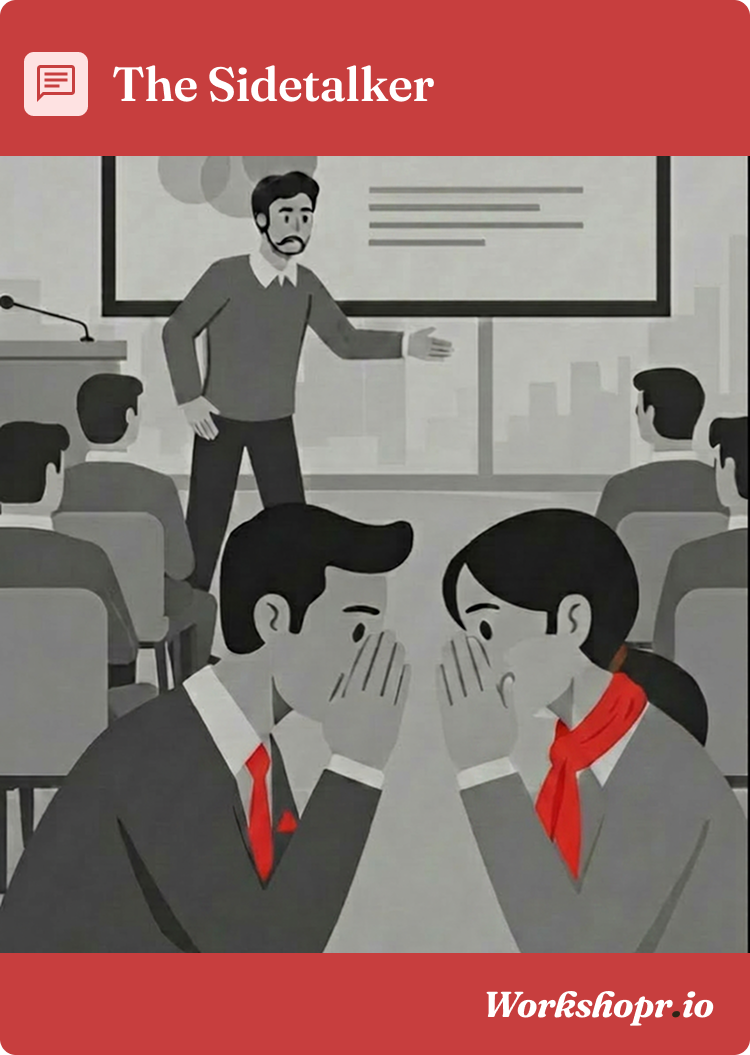
Private conversations disrupting
Stand near them, pause, or say "Let's bring that conversation to the group."
Pull this card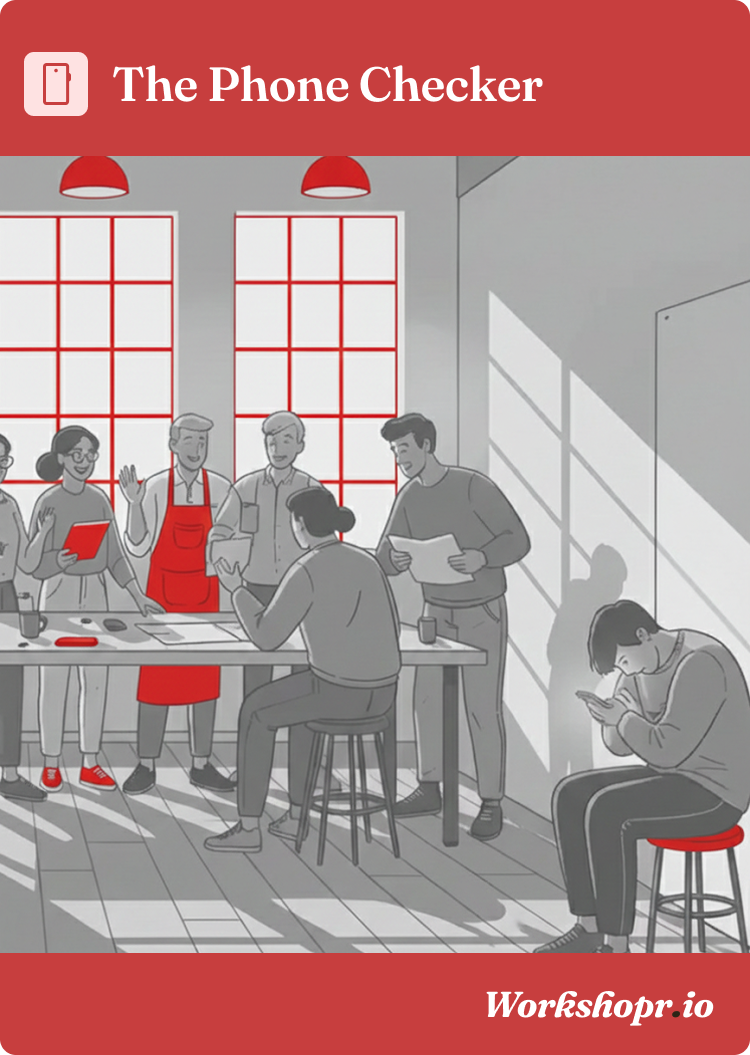
Distracted by devices
Let's do a quick phone stack - everyone put phones in center, first to grab pays for coffee.
Pull this card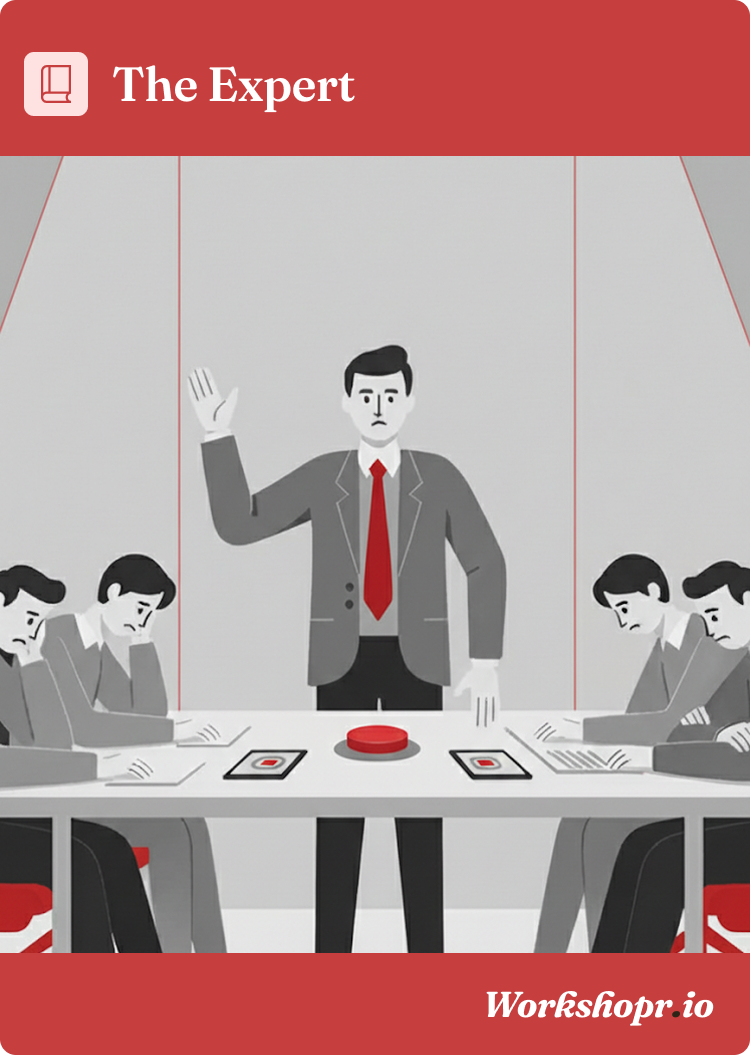
Dismissing others' ideas
You bring valuable experience. Help us understand how a newcomer might see this.
Pull this card
Someone joins late and disrupts
Brief nod, continue. Catch them up at next break or have a buddy fill them in.
Pull this card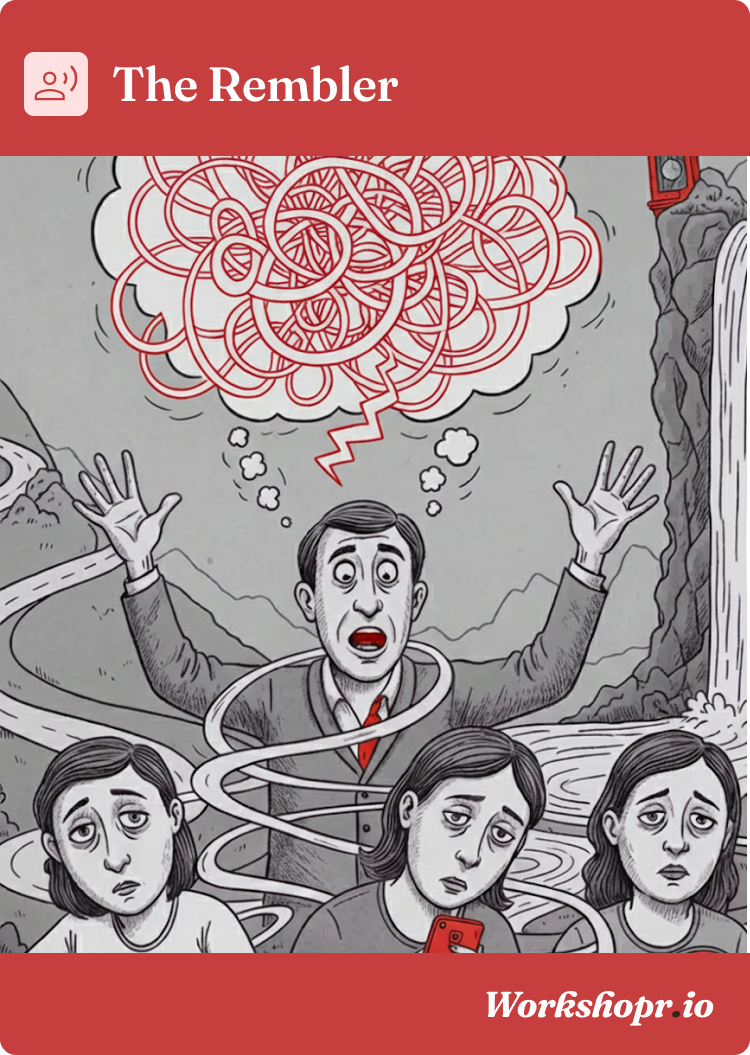
Long-winded responses going nowhere
"Let me pause you there - what's the key point you're making?"
Pull this card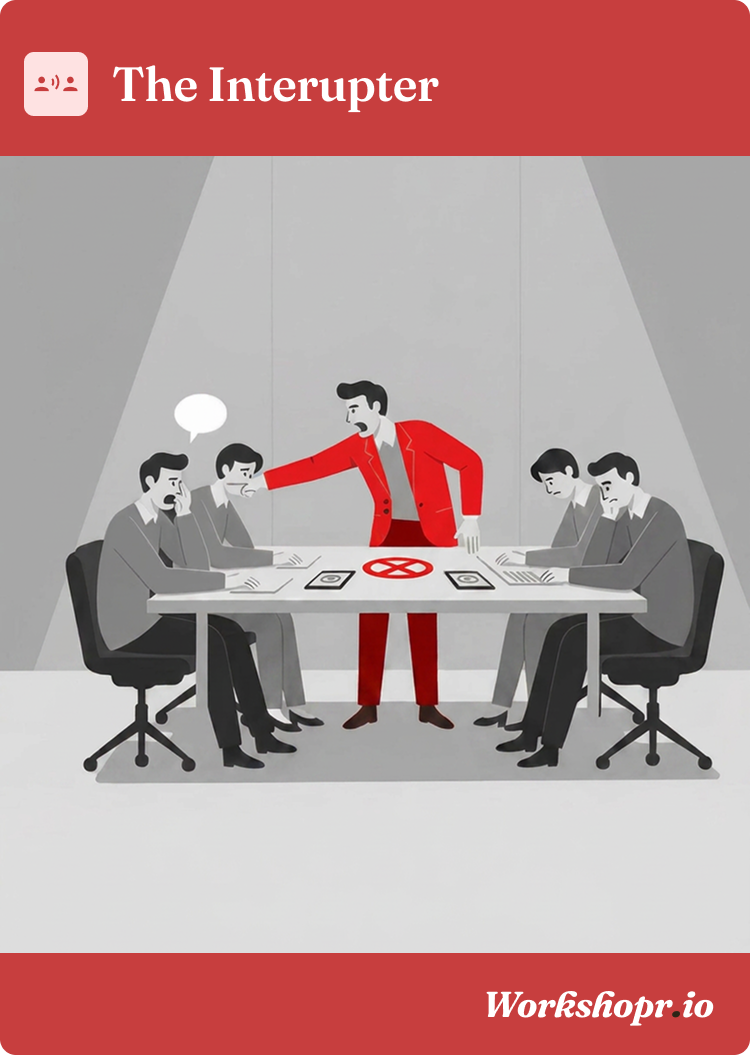
Participant keeps cutting others off mid-sentence
Hold that thought, [Name] - let's let [Other Name] finish, then you're straight up next.
Pull this card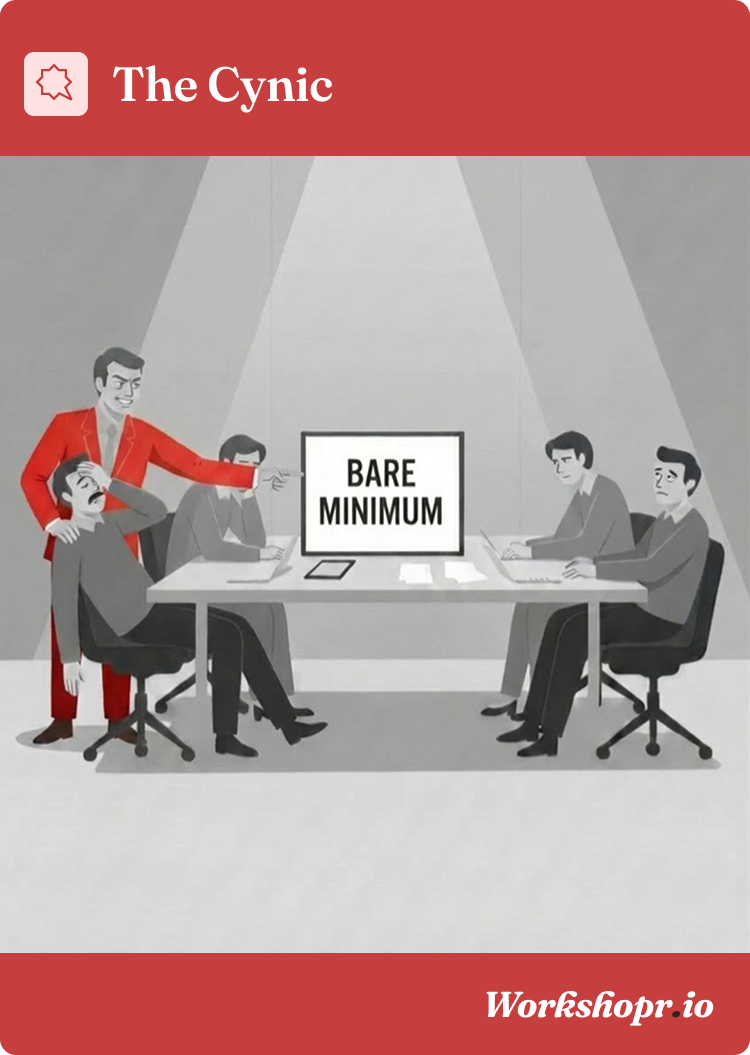
"Nothing will change anyway" fatalism
I hear the skepticism - let's use it. What would need to be different for you to see this actually working?
Pull this cardEach card is triggered by a specific challenge you're watching unfold in the room — a silence, a dominator, a stalled decision.
Each card gives you an exact phrase to say, plus detailed tips and a prevention strategy for next time.
Use the quick response on the spot, or choose an alternative that fits your room. Back on track in seconds.
Describe the challenge you're facing and I'll find the right intervention cards to help.
Or browse by category: